Next Stop, Orbit: Why Space Is the Next Silicon Valley
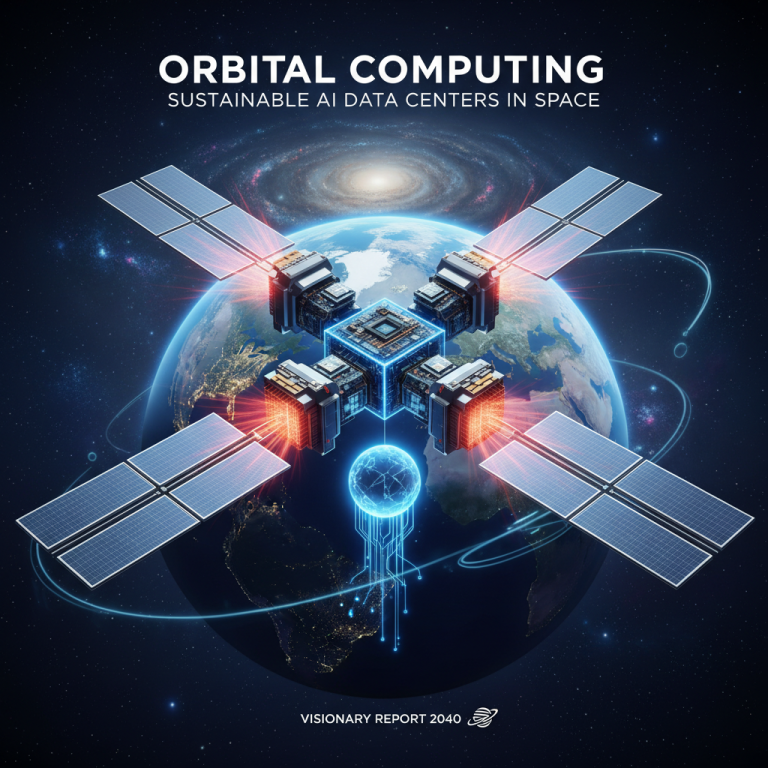
Space is no longer just a playground for astronauts and rocket scientists—it’s the ultimate new frontier for hyperscale computing. The major cloud providers are already looking up. Amazon has firmly planted its flag with AWS Ground Station and its massive satellite internet initiatives, while Google has officially partnered with Planet Labs to test AI-enabled datacenters in orbit by 2027. The hyperscale cloud is literally heading to the stars.
But just like massive earth-bound infrastructure projects, space initiatives are incredibly vulnerable to being slowed down by regulatory red tape. Right now, sending novel commercial tech into orbit means navigating a frustrating maze of approvals from the FAA, FCC, and the Department of Commerce. This creates overlapping paperwork, unclear jurisdictions, and unpredictable timelines. For investors and innovators, that kind of regulatory uncertainty is a massive risk. If we want to scale the orbital economy, we need to remove these roadblocks and make space as predictable and easy to do business in as Silicon Valley.
Enter the Space Commerce Certification
To fix this exact bottleneck, the Department of Commerce rolled out a proposal in March 2026 for a streamlined Space Commerce Certification. It’s an opt-in framework specifically designed to clear the runway for novel space activities like orbital computing, in-space manufacturing, and satellite servicing.
For program details and updates, visit the official Space Commerce Certification page from the Office of Space Commerce.
Here is how it upgrades the system:
The 120-Day Shot Clock
Instead of applications languishing in regulatory limbo, the new process establishes a strict 120-day timeline for reviews.
Default to “Yes”
Projects receive a “presumption of approval” unless reviewing agencies can identify specific, unresolvable risks to national security, foreign policy, or public safety.
A Unified Framework
To stop the endless paperwork pile-up, other regulatory bodies—like the FAA and FCC—can rely on this single Space Commerce Certification to satisfy or completely waive their own redundant reviews.
When Does It Take Effect?
The best part? It’s designed to happen fast. Because this is a voluntary certification rather than a sluggish, multi-year federal rulemaking process, the Office of Space Commerce intends to deploy it quickly.
Instead of debating abstract rules in committee for years, the agency plans to implement the process by working directly through actual, real-world applications from the industry. It will iterate and refine its “light-touch” requirements as it goes, tackling immediate industry needs—like satellite servicing—first before expanding to larger operations such as commercial space stations and lunar missions.
The orbital economy is ready to launch. By stripping away bureaucratic friction, we can finally treat space not as an impossible regulatory hurdle, but as the next logical extension of our hyperscale infrastructure.