The Orbital Edge: Why VCs Are Betting Billions on Space Compute
The VC Shift: From Launch to Logic
The orbital economy has hit a massive turning point. For the last decade, space investment was dominated by the “Rocket Renaissance”—essentially a race to see who could get mass into orbit for the lowest price. But as we move through 2026, the smart money has moved on from the ride and is now focused on the work being done once the payload arrives.
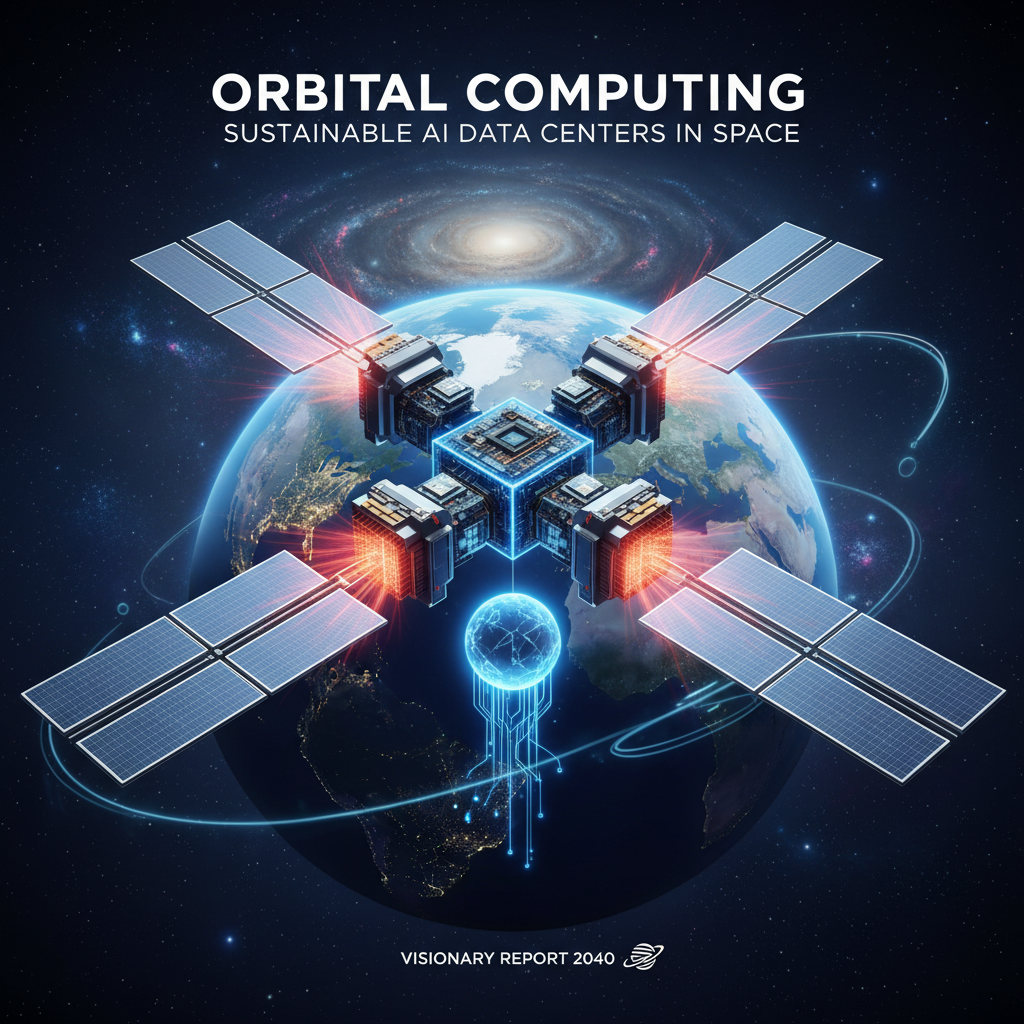
Venture capital is flooding into Space Compute, treating Low Earth Orbit (LEO) as the ultimate “edge” for the world’s AI infrastructure.
In the first half of 2026, we’ve seen a significant rotation of capital toward “Compute-as-a-Service” in orbit. The standout player in this space is Starcloud.
The Unicorn Leap: Starcloud recently grabbed headlines by raising $170 million in a Series A at a $1.1 billion valuation. They became one of the fastest companies in Y Combinator history to hit unicorn status, largely because they’ve already proven the tech works. Last year, they successfully ran AI models on an Nvidia H100 GPU sitting 500km above Earth.
Aetherflux is Close Behind: While Starcloud has the current valuation lead, Aetherflux (founded by Robinhood co-founder Baiju Bhatt) is currently in the middle of a massive $250M to $350M Series B raise. They are reportedly seeking a $2 billion valuation to build out their “Galactic Brain” constellation. Like Starcloud, Aetherflux is pivoting away from just beaming power to Earth and toward using that power for on-orbit AI processing clusters.
Infrastructure Expectations: Defense and the “Kill Chain”
For defense programs, space compute represents a total shift in how we handle tactical data. The U.S. Department of Defense (DoD) is moving away from “bent-pipe” satellites—those old-school systems that just grab a signal and bounce it down to a ground station.
Shortening the Latency Loop
Modern threats move way too fast for the traditional “down-process-up” cycle. If you’re tracking a hypersonic missile or a drone swarm, you can’t wait for a ground station in another hemisphere to crunch the numbers.
- Edge Processing: Defense infrastructure now demands that satellites identify and track threats on-board.
- Proliferated Architectures: The DoD is heavily funding “pLEO” constellations. These are thousands of small, interconnected satellites acting as a distributed mesh network. By using Starcloud-style compute nodes, the military can shift data processing from one satellite to the next in real-time if a specific node is jammed or targeted.
Civilian and Commercial Needs: Sustainability and Scale
For NASA and the commercial sector, the big word for 2026 is interoperability. Since space is getting crowded, the era of “single-use” hardware is basically over.
The Orbital Cloud: We’re seeing the rise of an “Orbital Cloud” that looks a lot like what AWS did for the early internet. Instead of NASA building a custom computer for every single mission, they’ll likely lease time on commercial compute nodes.
In-Orbit Servicing: Infrastructure is now being designed to be serviced, not ditched. VCs are backing “space tugs” and refueling startups to ensure that a high-performance GPU cluster stays operational for a decade or more through modular upgrades in orbit.
The Technical Hurdles: Power and Heat
The primary barrier to this vision is pure physics. Data centers generate an incredible amount of heat, and in a vacuum, you don’t have air to help cool things down.
| Challenge | 2026 Infrastructure Solution |
|---|---|
| Power Density | Using massive kilowatt-class solar arrays and even small fission reactors. |
| Thermal Management | Advanced phase-change cooling and huge deployable radiators. |
| Connectivity | Moving from Radio Frequency (RF) to Optical (Laser) Communications for 100Gbps+ links. |
Space is the New Tier 1 Data Center
The satellite has evolved from a simple mirror in the sky into a high-performance server. What we’re witnessing isn’t just an incremental improvement in space technology—it’s the birth of orbital infrastructure as a fundamental layer of the global compute stack.
The companies that understand this shift from building satellites to building the next generation of edge computing nodes that happen to orbit at 17,000 mph.
As VC flows continue to favor these vertically integrated compute platforms, the message for defense and civilian programs is loud and clear: Space is the new Tier 1 data center.