We Ran Out of Rockets Before We Ran Out of Money
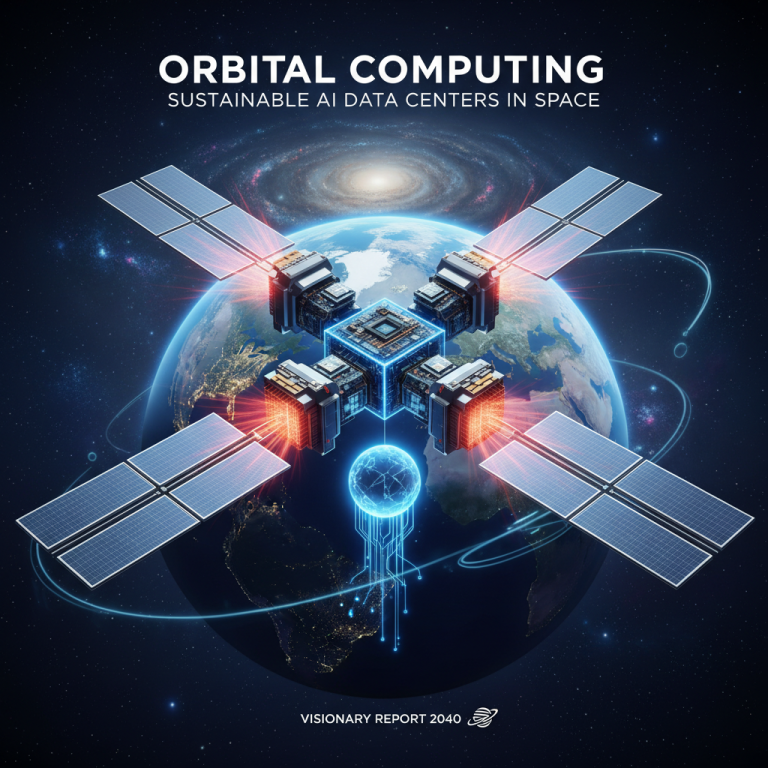
Cowboy Space just raised $275 million to build their own rocket. Not because they want to be in the launch business. Because there literally aren’t enough rockets available to put all the orbital data centers into space that people want to build right now.
Let that sink in. The bottleneck on space-based AI infrastructure isn’t money, power, or even compute. It’s launch vehicles.
How We Got Here
Baiju Bhatt — yes, the Robinhood co-founder — started this company in 2024 as Aetherflux. The original plan: collect solar power in space, beam it to Earth. Cool idea. They pivoted to using that power for orbital computing instead. Even cooler.
Then they hit the wall. They went shopping for launch capacity and discovered something nobody was talking about: there isn’t any. Starship is still in test flights. New Glenn failed its third launch in April. Everyone else is booked solid or years away from commercial availability.
So Bhatt did what any rational person would do. He decided to build his own damn rocket.
The design is actually brilliant in its simplicity. They’re building the data center directly into the second stage of the rocket. It’s basically what we did with Explorer 1 in 1958 — stuff the payload full of electronics and leave it up there. Except now the electronics are H100s instead of Geiger counters.
Index led the round. Breakthrough Energy, Construct Capital, IVP, and SAIC came in too. Post-money valuation: $2 billion.
Why This Isn’t Crazy
Here’s what people miss about orbital compute: the physics actually work.
Free solar power 24/7 with no atmosphere in the way. Free cooling because vacuum is an infinite heat sink. And if you’re processing satellite imagery or running Earth observation workloads, you’re already up there with the data. Why downlink terabytes when you can run inference on-orbit and just send the results?
Starcloud already proved this works. They trained an AI model in space in November. Not a toy model — Google’s Gemma. They’re planning a 5GW orbital data center that would be cheaper per watt than building the equivalent solar farm on Earth.
NVIDIA saw this coming. They’ve got three hardware platforms specifically for space: Vera Rubin for hyperscale, IGX Thor for industrial edge, Jetson Orin for constrained environments. They’re working with six different orbital infrastructure companies.
The numbers are insane. NVIDIA has committed $40 billion to AI infrastructure this year. A chunk of that is going up.
The Part That Bothers Me
We’re launching data centers before we’ve really figured out the networking. Or proven that commercial GPU architectures can handle radiation at scale. Or validated that thermal management works through LEO day-night cycles under full load.
This feels like 1999 in the best and worst ways. The capital is ahead of the engineering, which is ahead of the market proof. When a company gets valued at $2B because “we couldn’t find rockets,” you’re pricing in a future that hasn’t happened yet.
Bhatt’s pitch is that there’s room for multiple winners. Maybe. But he’s also going head-to-head with SpaceX and Blue Origin on launch, while also competing with Starcloud and everyone else on orbital compute, while also trying to build an entirely new category of infrastructure.
That’s a lot of execution risk.
What Actually Matters Here
Forget the hype for a second. Three things are now true that weren’t true 24 months ago:
One: AI, space, and cloud aren’t adjacent markets anymore. They’re the same supply chain. NVIDIA invests in launch providers. Crypto miners rebrand as AI infrastructure. Rocket companies are cloud companies. This is complete vertical integration.
Two: The constraint flipped. It’s not capital, it’s not power, it’s not even compute. It’s physical access to orbit. When launch capacity becomes the binding constraint on a venture-backed market, that’s a real signal.
Three: This is commercially real. There’s revenue-generating hardware on-orbit doing inference today. This isn’t a lab experiment. Customers are paying for this.
So yeah, maybe we’re building too fast. Maybe the market doesn’t materialize and this becomes the world’s most expensive physics lesson. Maybe Starship actually flies at volume and makes all these captive launch programs obsolete.
But if the AI buildout keeps going — and I mean really keeps going, not just hype cycles — then somebody is going to make a stupid amount of money putting data centers in space.
Bhatt is betting $275 million of other people’s money that he’s that somebody.
We’ll know in about three years whether he was early or just wrong.
Cowboy Space just raised $275 million to build their own rocket. Not because they want to be in the launch business. Because there literally aren’t enough rockets available to put all the orbital data centers into space that people want to build right now.
Let that sink in. The bottleneck on space-based AI infrastructure isn’t money, power, or even compute. It’s launch vehicles.
How We Got Here
Baiju Bhatt — yes, the Robinhood co-founder — started this company in 2024 as Aetherflux. The original plan: collect solar power in space, beam it to Earth. Cool idea. They pivoted to using that power for orbital computing instead. Even cooler.
Then they hit the wall. They went shopping for launch capacity and discovered something nobody was talking about: there isn’t any. Starship is still in test flights. New Glenn failed its third launch in April. Everyone else is booked solid or years away from commercial availability.
So Bhatt did what any rational person would do. He decided to build his own damn rocket.
The design is actually brilliant in its simplicity. They’re building the data center directly into the second stage of the rocket. It’s basically what we did with Explorer 1 in 1958 — stuff the payload full of electronics and leave it up there. Except now the electronics are H100s instead of Geiger counters.
Index led the round. Breakthrough Energy, Construct Capital, IVP, and SAIC came in too. Post-money valuation: $2 billion.
Why This Isn’t Crazy
Here’s what people miss about orbital compute: the physics actually work.
Free solar power 24/7 with no atmosphere in the way. Free cooling because vacuum is an infinite heat sink. And if you’re processing satellite imagery or running Earth observation workloads, you’re already up there with the data. Why downlink terabytes when you can run inference on-orbit and just send the results?
Starcloud already proved this works. They trained an AI model in space in November. Not a toy model — Google’s Gemma. They’re planning a 5GW orbital data center that would be cheaper per watt than building the equivalent solar farm on Earth.
NVIDIA saw this coming. They’ve got three hardware platforms specifically for space: Vera Rubin for hyperscale, IGX Thor for industrial edge, Jetson Orin for constrained environments. They’re working with six different orbital infrastructure companies.
The numbers are insane. NVIDIA has committed $40 billion to AI infrastructure this year. A chunk of that is going up.
The Part That Bothers Me
We’re launching data centers before we’ve really figured out the networking. Or proven that commercial GPU architectures can handle radiation at scale. Or validated that thermal management works through LEO day-night cycles under full load.
This feels like 1999 in the best and worst ways. The capital is ahead of the engineering, which is ahead of the market proof. When a company gets valued at $2B because “we couldn’t find rockets,” you’re pricing in a future that hasn’t happened yet.
Bhatt’s pitch is that there’s room for multiple winners. Maybe. But he’s also going head-to-head with SpaceX and Blue Origin on launch, while also competing with Starcloud and everyone else on orbital compute, while also trying to build an entirely new category of infrastructure.
That’s a lot of execution risk.
What Actually Matters Here
Forget the hype for a second. Three things are now true that weren’t true 24 months ago:
One: AI, space, and cloud aren’t adjacent markets anymore. They’re the same supply chain. NVIDIA invests in launch providers. Crypto miners rebrand as AI infrastructure. Rocket companies are cloud companies. This is complete vertical integration.
Two: The constraint flipped. It’s not capital, it’s not power, it’s not even compute. It’s physical access to orbit. When launch capacity becomes the binding constraint on a venture-backed market, that’s a real signal.
Three: This is commercially real. There’s revenue-generating hardware on-orbit doing inference today. This isn’t a lab experiment. Customers are paying for this.
So yeah, maybe we’re building too fast. Maybe the market doesn’t materialize and this becomes the world’s most expensive physics lesson. Maybe Starship actually flies at volume and makes all these captive launch programs obsolete.
But if the AI buildout keeps going — and I mean really keeps going, not just hype cycles — then somebody is going to make a stupid amount of money putting data centers in space.
Bhatt is betting $275 million of other people’s money that he’s that somebody.
We’ll know in about three years whether he was early or just wrong.